Ambassadorial Dialogue: Advancing the Right to Health and Global Health Equity through the Universal Periodic Review
Start Date: 8 September 2026
End Date: 8 September 2026
Location: Geneva, Switzerland
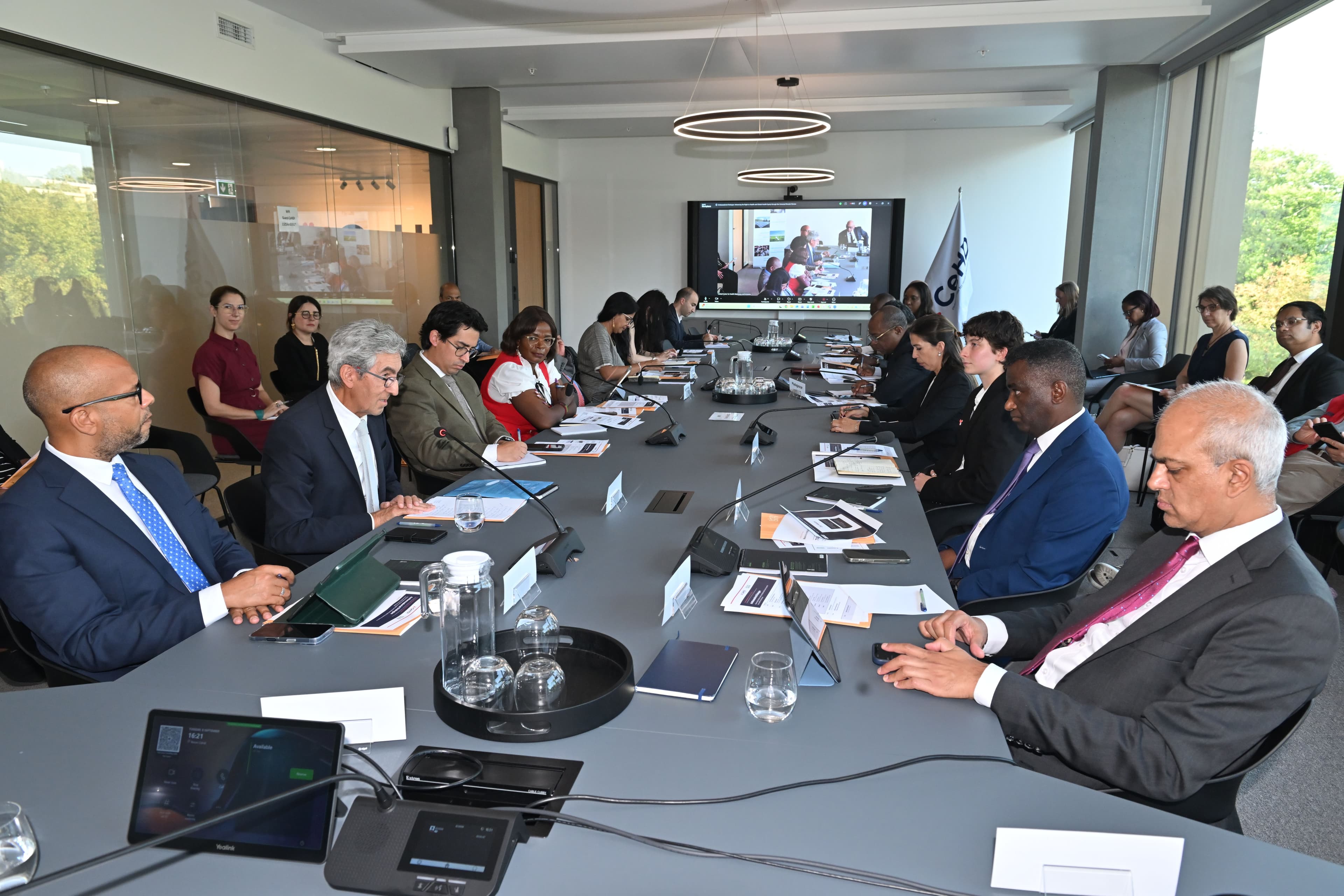
The South Centre and the Global Center for Health Diplomacy and Inclusion (CeHDI) convened the Ambassadorial Dialogue to examine how the Universal Periodic Review (UPR) of the United Nations Human Rights Council can be used more effectively to advance the right to health and global health equity, especially for women and girls. The dialogue focused on how countries can strengthen health-related UPR recommendations, implementation and follow-up, and on the value of South-South cooperation in sharing experience with the UPR and building country capacity to engage with it. The dialogue also considered how stronger collaboration among Global South countries in general can increase their collective influence in Geneva-based health negotiations, such as on issues related to the WHO Pandemic Agreement.
Opening remarks and presentations
Dr Haileyesus Getahun, CEO of CeHDI, recalled that CeHDI had examined the potential of the UPR in response to scepticism that health belonged primarily within WHO processes and that the UPR had little practical impact. He presented findings from CeHDI research examining maternal health outcomes in 89 countries, which found an association between exposure to maternal health-related UPR recommendations and improvements in maternal mortality, skilled birth attendance and contraceptive use. While emphasizing that the analysis did not establish causation, he argued that the findings supported greater consideration of the UPR as a mechanism capable of contributing to health outcomes and mobilizing whole-of-government and whole-of-society action on the right to health.
Dr Carlos Correa, Executive Director of the South Centre, emphasized the potential of the UPR to advance the right to health, particularly for women and girls, and the importance of engagement between health and human rights processes in Geneva. He also referred to the broader global health equity debate, highlighting significant differences between developed and developing countries in the ongoing PABS negotiations and the importance of ensuring that pathogen data access is accompanied by meaningful and equitable benefit sharing.
Rachel Rielle, Data Manager at CeHDI, presented the Health and Rights Observatory, which allows users to examine UPR recommendations by country, region, theme and UPR cycle, together with health trends and relevant national legal frameworks. CeHDI also produces country profiles drawing on these data to support preparation for UPR sessions. The presentation demonstrated how the resource can help diplomats, policymakers and civil society to identify countries’ health priorities, compare recommendations, and strengthen evidence-based engagement with the UPR.
Access to the presentation by Rachel Rielle here
Daniel Uribe of the South Centre presented The South Centre Toolkit: Advancing the Rights of Women and Girls to the Highest Attainable Standards of Health. Designed to help the UPR evolve from a procedural reporting obligation towards a strategic tool for implementation, the toolkit is structured around three linked functions: measuring through a human rights-based approach to data; dialogue through SMART recommendations that are specific, measurable, achievable, relevant and time-bound; and implementation through national mechanisms for implementation, reporting and follow-up. The approach is intended to help States work on the right to health across government, translate recommendations into domestic action, and identify where technical assistance, financing and international cooperation are needed.
Access to the presentation by Daniel Uribe here
The two resources are complementary: the CeHDI Health and Rights Observatory provides evidence and analysis to help identify country health priorities, policies and relevant UPR recommendations, while the South Centre toolkit supports recommendation development, implementation and follow-up.
Ambassadorial panel discussion
The panel was moderated by H.E. Dr Leslie Ramsammy, Permanent Representative of Guyana to the United Nations Office and other international organizations in Geneva. He invited panelists to consider three broad themes: the use of the UPR to strengthen accountability and domestic action on the right to health; the relationship between the right to health and equity objectives in the ongoing PABS negotiations; and the role of international assistance and cooperation in realizing the right to health.
H.E. Ever Mlilo, Permanent Representative of Zimbabwe, focused on the ongoing PABS negotiations and the role of Global South coalitions. She argued that the Geneva-based Africa Group and the Group on Equity in Health have increased both the negotiating weight and substantive influence of developing countries by seeking to translate equity from a general principle into concrete legal arrangements. Given the experience of COVID-19, she stressed that countries providing pathogens, biological materials and sequence information should receive tangible benefits, including equitable access to vaccines, diagnostics and therapeutics. She also highlighted Zimbabwe’s role in helping to coordinate African positions and supporting proposals for standardized contractual arrangements and stronger requirements for benefit sharing within the PABS system.
H.E. Matthew Wilson, Permanent Representative of Barbados, emphasized the UPR’s practical value as a universal, state-led process that can strengthen peer learning, whole-of-society engagement and national health policies. He highlighted the capacity constraints facing small developing country missions, noting that an invitation to participate in multilateral processes does not by itself ensure meaningful influence or engagement. He called for sustained investment in technical negotiating capacity; stronger links between Geneva missions, capitals and regional organizations; strengthened South-South cooperation, and access to timely independent legal and policy expertise. He stressed that capacity building should enable developing countries not simply to respond to proposals developed by others, but to formulate proposals and shape negotiations themselves. Barbados’ appointment of a dedicated health attaché in Geneva was cited as one practical investment in this capacity. Partnerships with institutions such as the South Centre, CeHDI and regional organizations also help to compensate for the limited technical resources available in many missions.
H.E. Zaheer Laher, Permanent Representative of South Africa, noted that the value of the UPR lies ultimately in what happens after recommendations are made. He highlighted its potential as a mechanism for peer learning and practical exchange among States and cautioned against regarding it simply as another reporting obligation. Ambassador Laher called for recommendations that are sufficiently concrete to address structural barriers to health, including inequality, inadequate infrastructure, workforce shortages and unequal access to medicines and technologies. He recommended strengthening the links between UPR recommendations and national planning, budgeting, legislation and implementation, improving follow-up between UPR cycles, and aligning recommendations where relevant with the SDGs, WHO processes and other international commitments.
“The value of the UPR ultimately depends on what happens after the review. We should therefore strengthen the connection between recommendations received during the UPR and national planning, budgeting, legislation and implementation.” – Ambassador Zaheer Laher, South Africa
The interventions emphasized the importance of cooperation among Global South countries, notably in Geneva. The Africa Group, the Group on Equity in Health and regional platforms such as CARICOM were considered important opportunities to pool expertise, develop common positions, and increase negotiating influence. The discussion on PABS illustrated the broader political environment in which these issues are being considered, reflecting continuing concern among developing countries that international health agreements must address longstanding inequities between the Global North and Global South. Panelists particularly stressed that international cooperation should produce reciprocal and practical benefits rather than rely only on developing countries providing resources, data or cooperation without the benefit of equitable access to resulting health products.
In remarks concluding the panel, Ambassador Ramsammy emphasized the value of Geneva’s concentrated health and human rights ecosystem. He expressed concern that financial pressures and proposals to relocate multilateral functions could fragment this architecture and disproportionately reduce the ability of smaller missions to participate across interconnected health, human rights, trade and other processes. He emphasized that proximity among institutions can greatly facilitate coordination, enabling countries with limited capacity to engage across multiple processes and seek available technical expertise and support. In this context, he welcomed the Foundation for the Adaptation of International Geneva (FAGI) initiative which aims to reinforce Geneva’s leadership as a global health hub through a more inclusive system of global health governance. FAGI will be implemented by CeHDI in partnership with the African Union, the Caribbean Community, the Organisation of African, Caribbean and Pacific States, and the South Centre.
Discussion from the floor
Responding to the panel, H.E. Mr Edelin Calixte Ranadriamiandrisoa, Ambassador of Madagascar, proposed that the UPR could better address health challenges arising from climate change, environmental degradation, pandemics and armed conflict, as well as stronger links between the UPR process, WHO, the SDGs and other international mechanisms. H.E. Ms Aashna Wandani Kanhai, Ambassador of Suriname, emphasized the value of greater South-South exchange of health policies and indicated that Suriname would join efforts by other countries to address customs barriers affecting menstrual products. The representative of Angola welcomed the practical resources presented and their potential to help countries use the UPR more strategically and translate commitments into measurable health improvements.
Suggested ways forward
- Strengthen links between reporting and implementation: UPR recommendations should be integrated wherever possible into national health policies, plans, budgets, legislation and programmes, with stronger monitoring and follow-up between review cycles.
- Improve the quality of UPR recommendations: Recommendations should be specific, realistic and implementable and should identify where technical assistance, capacity-building or international cooperation is necessary.
- Use the UPR more deliberately for peer learning: The universal and state-led character of the UPR provides opportunities for countries to exchange practical experience and learn from approaches adopted elsewhere.
- Make use of available practical resources: The Health and Rights Observatory and the South Centre toolkit provide complementary resources to help countries identify relevant evidence and recommendations and strengthen implementation, reporting and follow-up.
- Strengthen capacity of missions to fully engage: Smaller missions may require additional technical capacity such as policy and legal expertise if they are to meaningfully engage in the UPR and other multilateral processes on health and human rights. Reform and devolution of the multilateral system should not reduce the meaningful engagement of small island and developing states in global health discussions and negotiations.
- Promote South-South cooperation in Geneva: Geneva-based coalitions can help countries to pool expertise, develop common positions and increase their negotiating influence, while stronger connections between human rights, health and other multilateral processes are important to reduce institutional fragmentation and ensure coherence of health policy across sectors.
In closing, Ambassador Ramsammy noted that the value of the UPR depends on translating recommendations into national policies, investments and programmes, and on implementation that is supported by peer governments, civil society and international partners. He encouraged use of the practical tools presented at the meeting. He concluded by reiterating the importance of cooperation among Global South countries for collective influence and sharing of lessons and best practices.
Access the full recording of the Ambassadorial Dialogue here