Sierra Leonne
Start Date: 19 January 2026
End Date: 20 January 2026
Location: Free Town, Sierra Leone
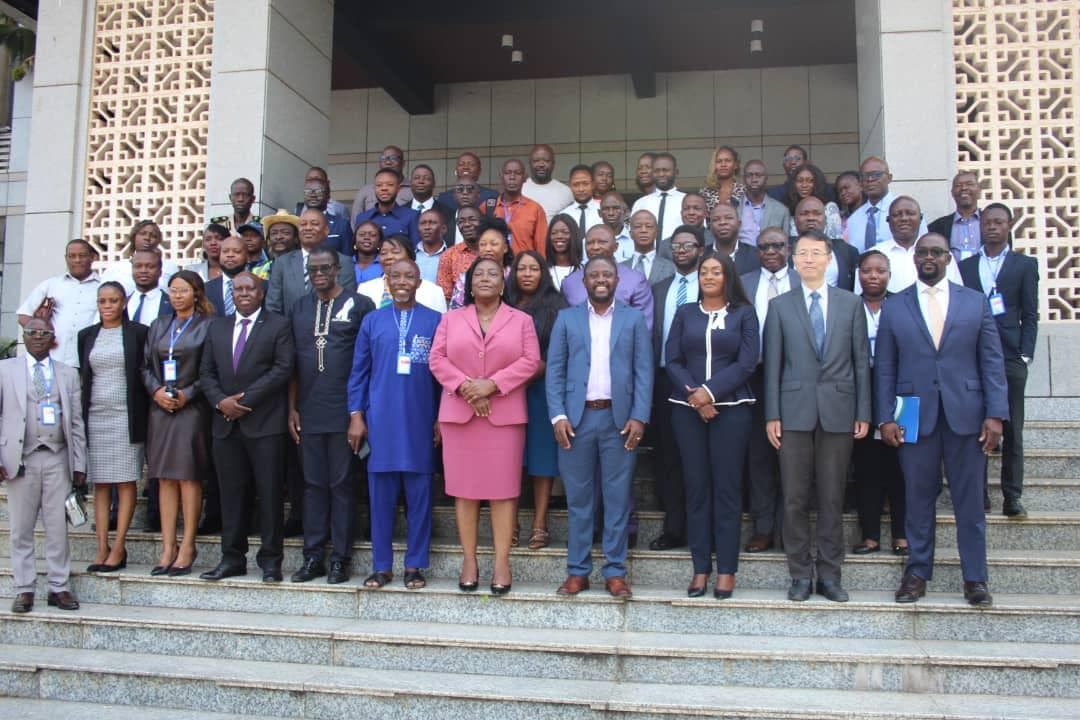
The Government of Sierra Leone advanced national priorities on sexual and reproductive health and rights (SRHR) and the right to health through its 4th Cycle Universal Periodic Review (UPR) process. The Ministry of Foreign Affairs and International Cooperation (MFAIC) convened a two-day national validation workshop in Freetown to finalize the country’s UPR National Report, with technical and strategic support from the Global Centre for Health Diplomacy and Inclusion (CeHDI) and the Embassy of the People’s Republic of China in Sierra Leone.
The workshop convened senior representatives from key Government Ministries, Departments and Agencies (MDAs), civil society, and development partners, reflecting a strong multi-sectoral approach. Participants included MFAIC leadership, the Ministry of Health, the Ministry of Justice, the Ministry of Gender and Children’s Affairs, and the Embassy of the People’s Republic of China in Sierra Leone.
The Director General of the Ministry of Foreign Affairs and International Cooperation, Mr. Alan C.E. Logan, in his opening remarks emphasized the significance of the workshop in improving the country’s human rights framework by stating that, “this validation exercise is essential not only for our reporting obligations but also for fostering dialogue and collaboration among stakeholders.”
The Attorney General and Minister of Justice, Hon. Alpha Sesay Esq, while delivering the keynote address reiterated the government's commitment to upholding human rights as a cornerstone of national development by stating, “Our duty is to ensure that every citizen's rights are protected and upheld, thus contributing to peace and stability in our country. We note that demonstrating tangible progress on human rights makes the country attractive to development assistance and foreign investors aligned to the sustainable development goals.”
Sierra Leone has made significant progress in reducing maternal mortality, with estimates showing a decline from over 1,100 maternal deaths per 100,000 live births in 2013 to approximately 354 in 2023. Despite this progress, maternal mortality remains unacceptably high and nearly five times above the Sustainable Development Goal (SDG) target of 70, underscoring the need for accelerated and sustained action.
Discussions highlighted persistent SRHR gaps driving preventable maternal deaths, including high rates of adolescent pregnancy, extremely low contraceptive use among young girls, and the continued contribution of unsafe abortion to maternal mortality. The recognition of SRHR and the right to health as cross-cutting national priorities linked to justice, gender equality, social protection, and human rights accountability was evident
in the meeting with participants emphasizing the need for strengthened legal frameworks, policy coherence, and expanded access to quality SRHR services.
Mr. Magnus Morda Conteh, representing CeHDI, read a statement that praised Sierra Leone’s consistent story in the right to health and SRHR-related recommendations that have increased steadily, both in number and prominence, he however indicated that there was also unfinished business that needed urgent action by highlighting that “unblocking the stalled Safe Motherhood and Reproductive Health Care Bill through national dialogue, and in the context of the fourth UPR cycle, presents a critical opportunity.” He emphasized that until this legislation is enacted, the legal framework remained insufficient to scale up SRHR services and tackle the high maternal mortality rate of Sierra Leone. Positioning the Bill within the 4th UPR cycle was highlighted as a concrete pathway to translate long-standing UPR recommendations into actionable legal and policy reform.
Through its engagement in the UPR process at the national level, CeHDI supported the positioning of SRHR and the right to health at the centre of Sierra Leone’s 4th Cycle National Report. Analysis of previous UPR cycles indicates that health and SRHR-related recommendations now account for nearly 40 percent of all recommendations addressed to Sierra Leone, reflecting both progress and the scale of remaining challenges.
The workshop reaffirmed the UPR as both an international reporting obligation and a strategic national tool to catalyse reform. By leveraging the 4th UPR cycle, Sierra Leone has an opportunity to accelerate progress on the Safe Motherhood and Reproductive Health Care Bill and to strengthen investments in quality SRHR services, critical steps toward safeguarding the health and rights of women and girls.
In her closing remarks the Deputy Minister of Foreign Affairs and International Cooperation (MFAIC), Hon. Francess P. Algali, emphasized the importance of the report validation exercise by indicating that “the realization of human rights is an inherently progressive process, and the report shows that we have moved from where we were before. Am sure that some progress has been made on the economic, social and cultural rights in Sierra Leonne”.